





If you truly want to understand how Protestantism was born, you have to step back into a turbulent 16th-century Europe and meet the man who stood at the center of it all. This is not just a biography of a monk. It is the story of a spiritual struggle, a theological revolution, and a movement that reshaped the Church and the Western world.
Early Life and Education (1483–1505)
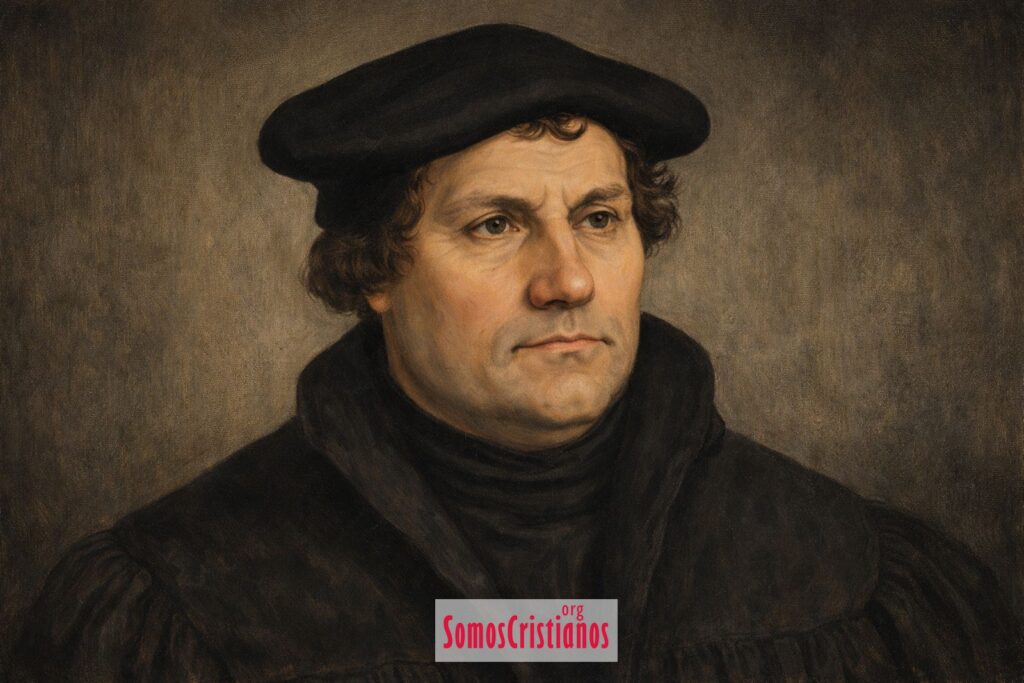
Martin Luther was born on November 10, 1483, in Eisleben, in the Holy Roman Empire (modern-day Germany). He was baptized the next day, November 11, the feast day of St. Martin of Tours, from whom he received his name.
His father, Hans Luder (later spelled Luther), was a miner who worked hard to improve his family’s social status. He wanted Martin to become a lawyer and rise beyond the limitations of their modest background. Luther received a strict education, first in Mansfeld and later in Magdeburg and Eisenach.
In 1501, he entered the University of Erfurt, one of the most respected universities in Germany. He earned his Master of Arts degree in 1505. His future seemed clear: law, prestige, stability. But something unexpected would change everything.
The Storm That Changed His Life
In July 1505, while returning to Erfurt, Luther was caught in a violent thunderstorm. A lightning bolt struck near him. Terrified and convinced he might die, he cried out:
“Help me, St. Anne! I will become a monk!”
He survived. And he kept his vow.
Much to his father’s disappointment, Luther entered the Augustinian monastery in Erfurt. He was ordained as a priest in 1507. Yet instead of peace, he found deep spiritual anxiety.
The Spiritual Crisis: How Can a Sinner Be Justified?
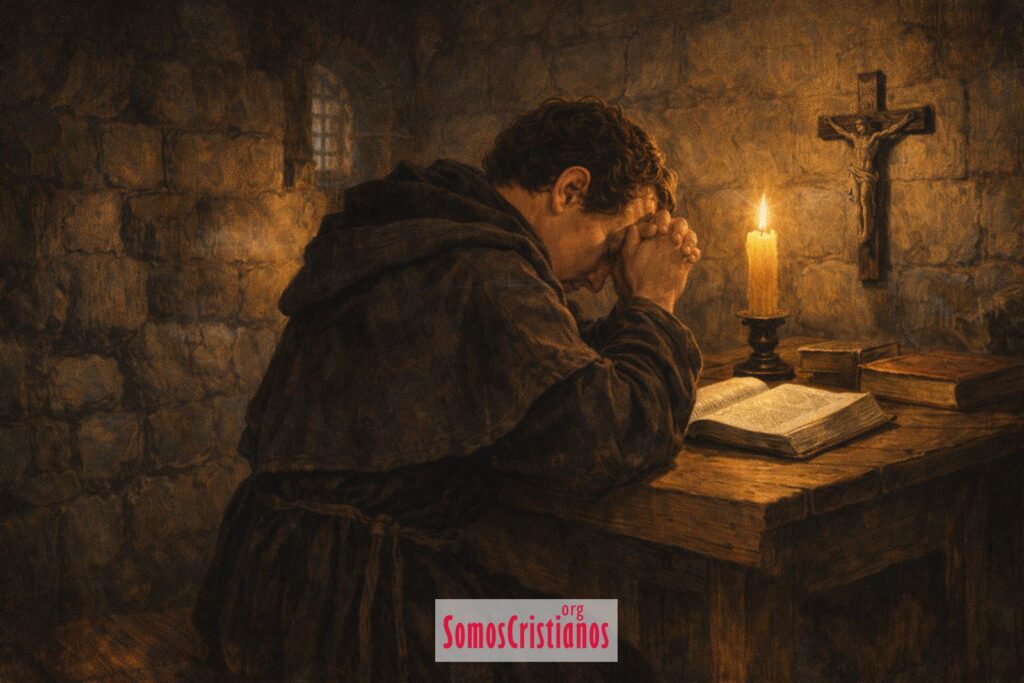
Luther struggled intensely with guilt and fear of God’s judgment. He fasted, prayed for hours, confessed obsessively, and practiced severe discipline. Still, he felt unworthy.
His central question was simple but overwhelming:
How can a sinful human being stand before a righteous and holy God?
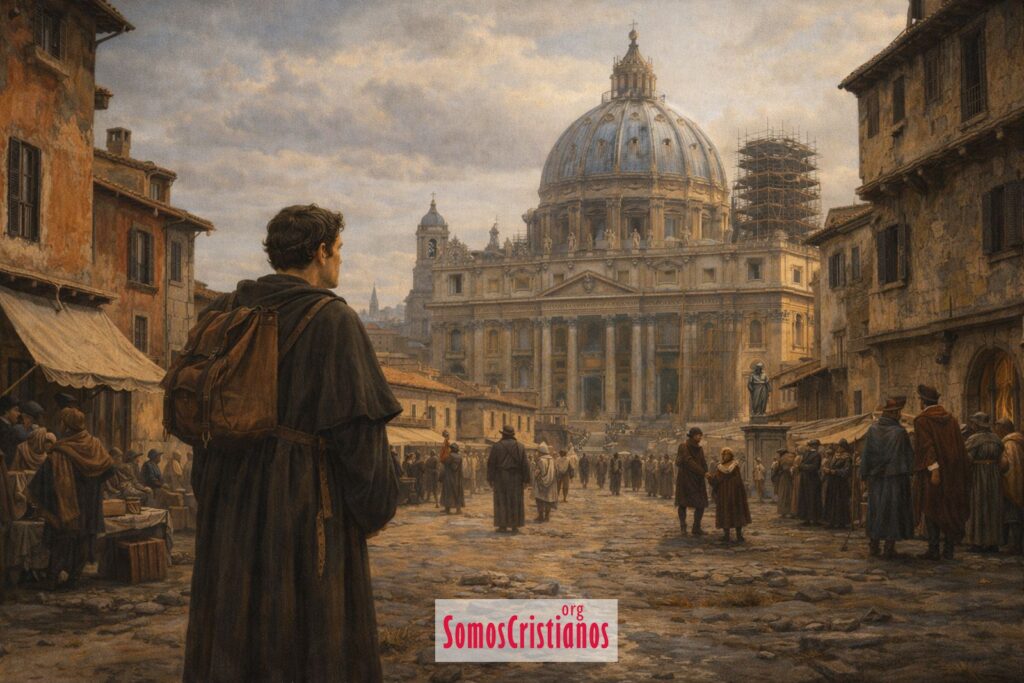
In 1510–1511, he traveled to Rome. He expected to see the heart of Christian devotion. Instead, he was disturbed by what he perceived as spiritual superficiality and moral corruption among some clergy.
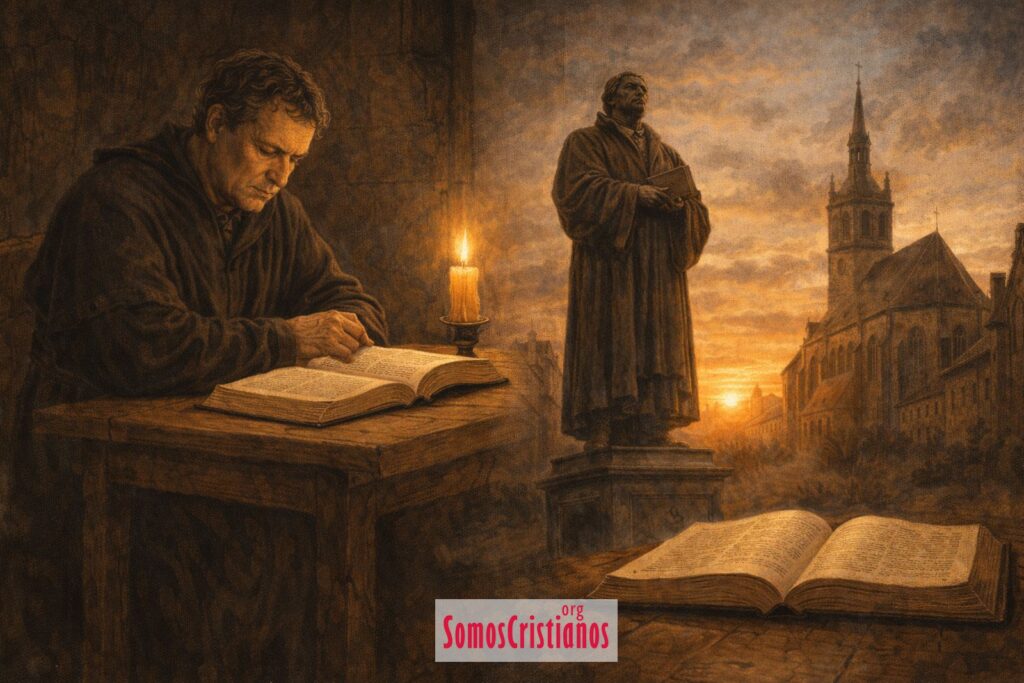
In 1512, he earned his Doctor of Theology degree and began teaching at the University of Wittenberg. While studying the Bible—especially the Letter to the Romans—he experienced what he later described as his theological breakthrough.
Romans 1:17 says:
“The righteous shall live by faith.”
Luther came to believe that God’s righteousness was not merely a standard that condemned sinners, but a gift given through grace to those who believe. Justification, he concluded, was by faith alone.
This insight became the foundation of his theology.




The 95 Theses (1517)
In 1517, a Dominican friar named Johann Tetzel was preaching indulgences—documents that supposedly reduced punishment in purgatory. The funds were partly intended for the construction of St. Peter’s Basilica in Rome.
Luther believed this practice distorted the gospel.
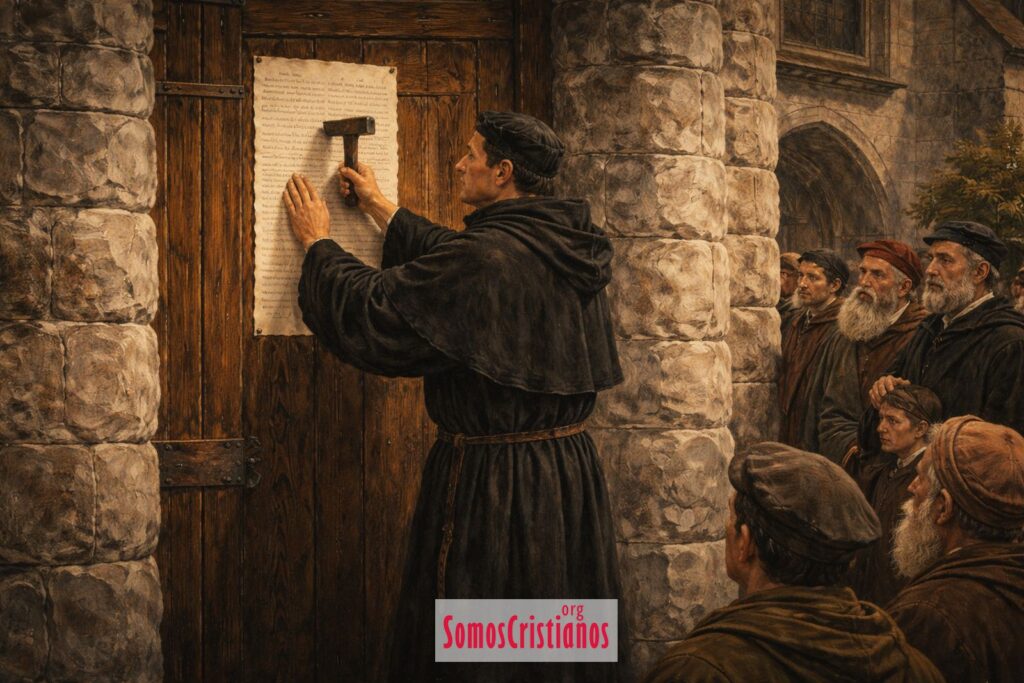
On October 31, 1517, he published his 95 Theses in Wittenberg. According to tradition, he posted them on the door of the Castle Church.
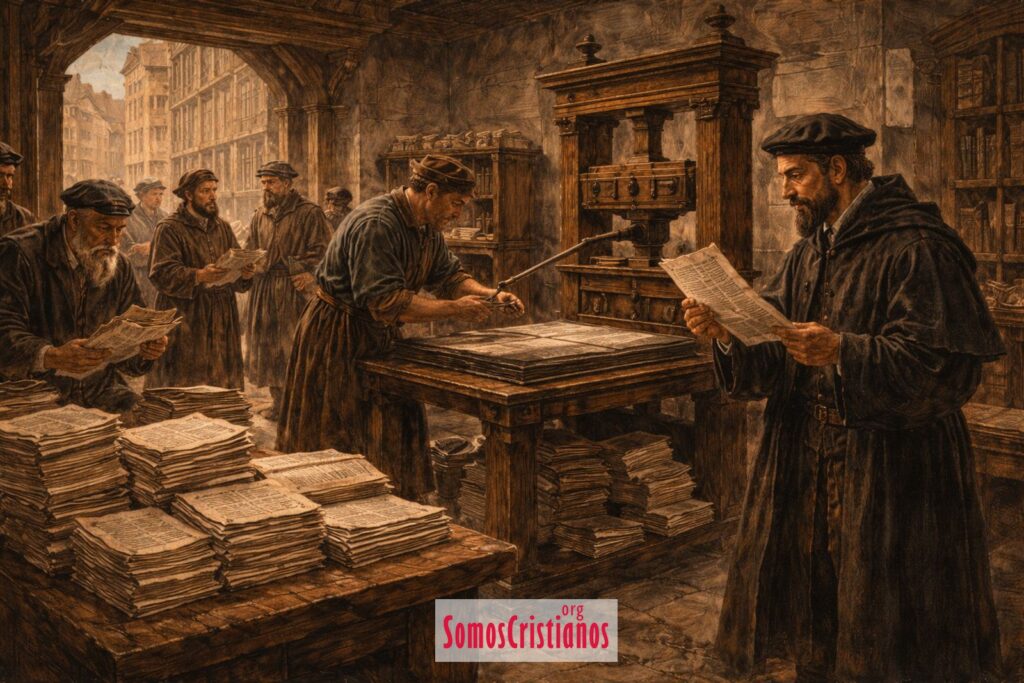
Originally written in Latin for academic debate, the theses were quickly translated into German and spread across Europe thanks to the printing press.
That moment marked the symbolic beginning of the Protestant Reformation.
Break with Rome and the Diet of Worms (1521)
The controversy escalated. Luther was questioned by church authorities and engaged in debates, including a famous one with Johann Eck in 1519.
In 1520, Pope Leo X issued a papal bull threatening excommunication unless Luther recanted. Luther publicly burned it.
He was officially excommunicated in 1521.
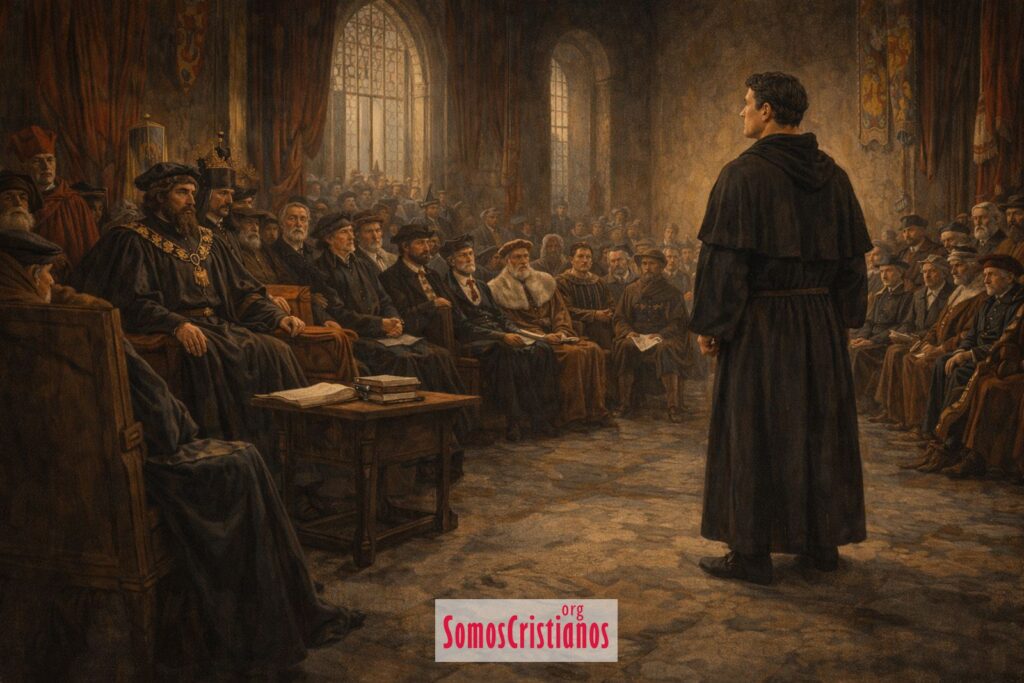
That same year, he was summoned before the Diet of Worms, an imperial assembly presided over by Emperor Charles V. Luther was asked to retract his writings.
His response became legendary:
“My conscience is captive to the Word of God. I cannot and will not recant anything.”
He was declared a heretic and outlaw.
Wartburg Castle and the German Bible
For his protection, Frederick the Wise arranged for Luther to be hidden in Wartburg Castle.
There, in just eleven weeks, Luther translated the New Testament into German. Later, he completed the Old Testament.
This translation was revolutionary:
• It made Scripture accessible to ordinary people.
• It shaped the modern German language.
• It strengthened national identity in German territories.
The Bible was no longer confined to Latin and clergy.
Reforming Church Life
Returning to Wittenberg, Luther helped reshape church practices:
• He rejected papal authority.
• He reduced the sacraments from seven to two (Baptism and the Lord’s Supper).
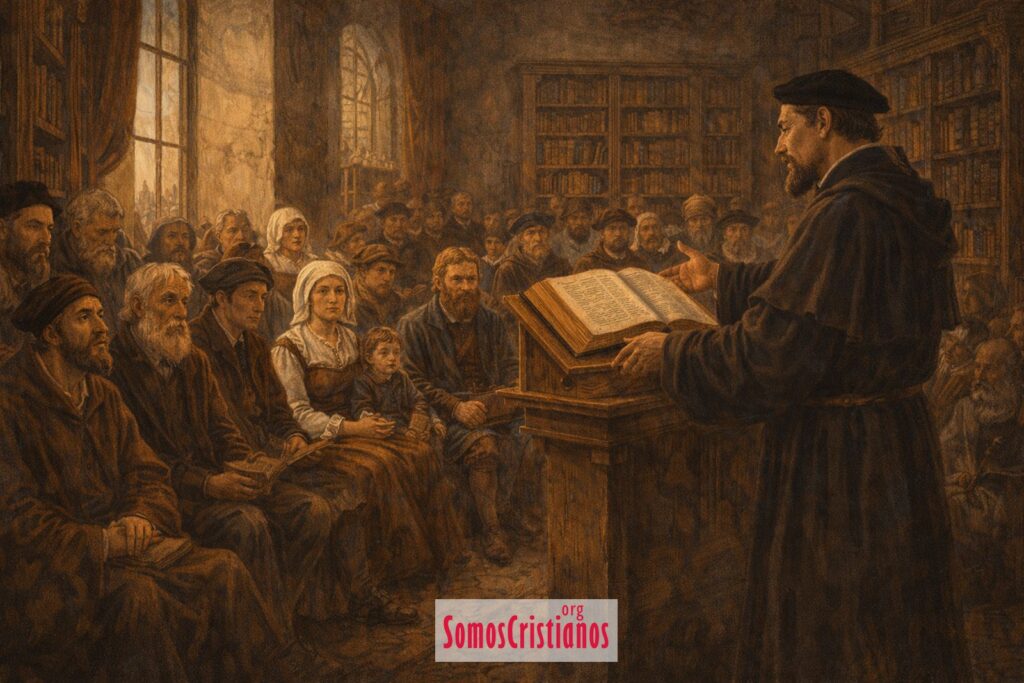
• He emphasized the “priesthood of all believers.”
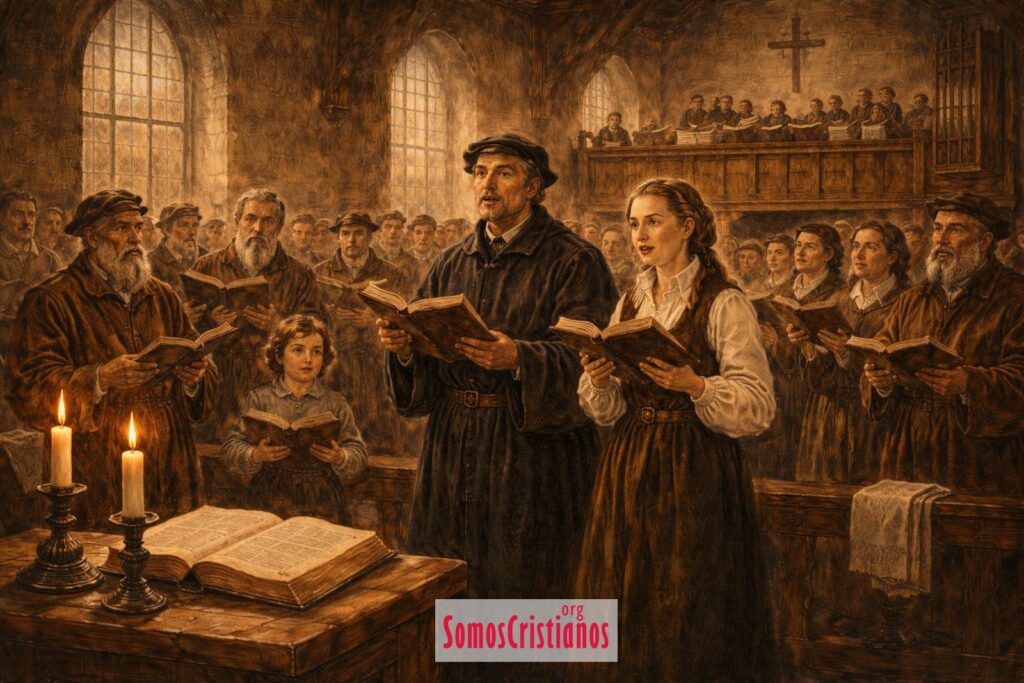
• He reformed worship and encouraged congregational singing.
In 1525, he married Katharina von Bora, a former nun. Their marriage became a model for Protestant clergy families and demonstrated his belief in the goodness of marriage.
The Peasants’ War
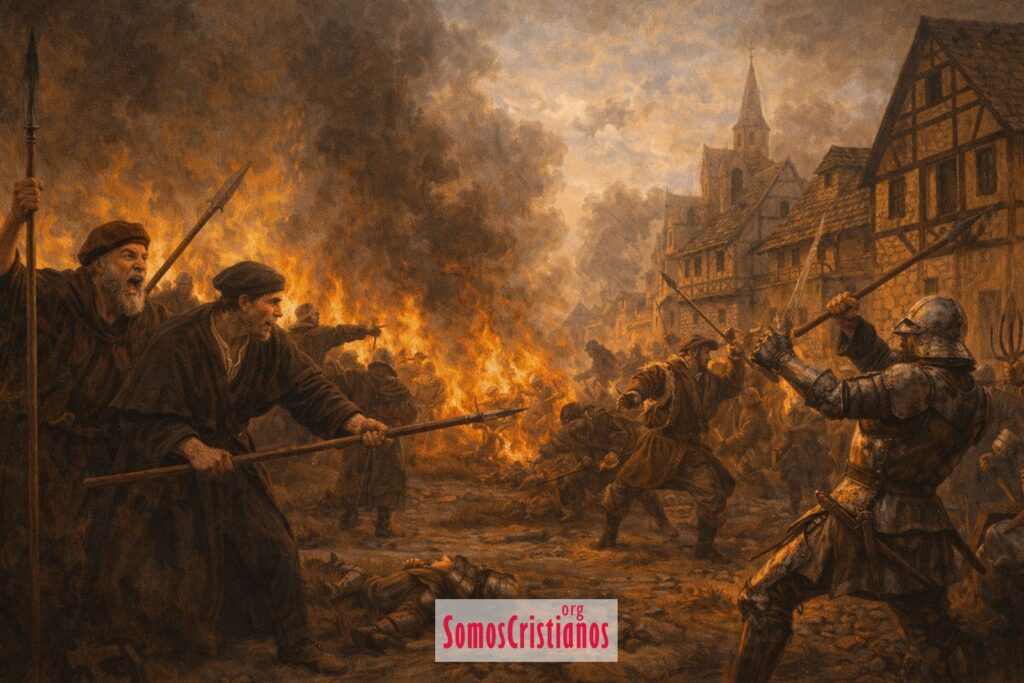
During the German Peasants’ War (1524–1525), many rebels claimed inspiration from reform ideas. Initially sympathetic to their grievances, Luther ultimately condemned the violent uprising.
His harsh response alienated some supporters and remains a controversial part of his legacy.
The Augsburg Confession and the Rise of Lutheranism
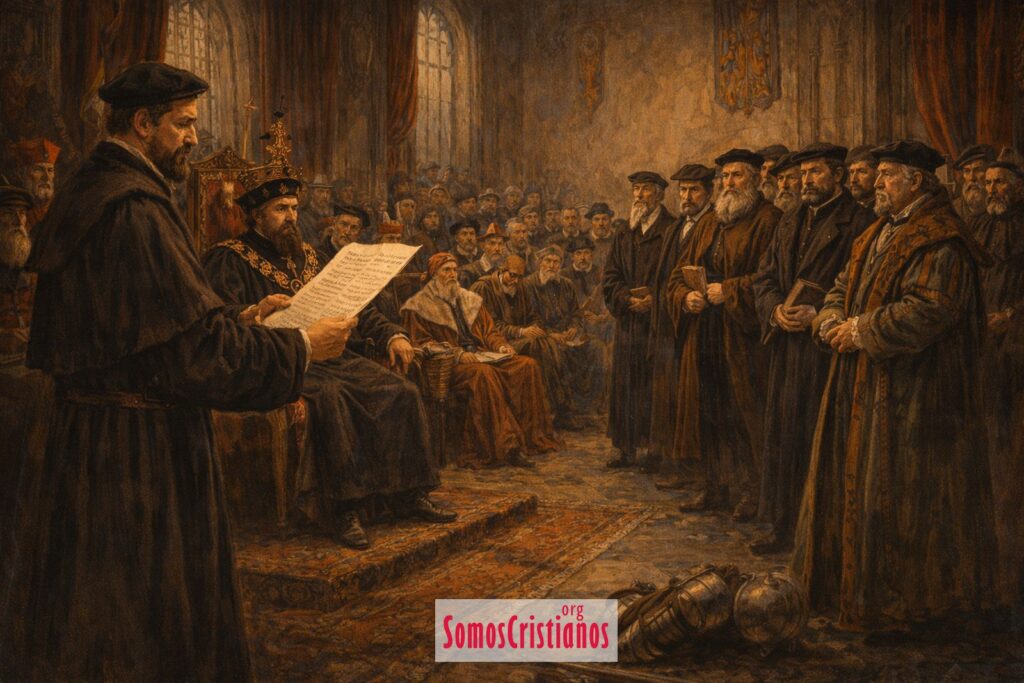
In 1530, the Augsburg Confession—primarily written by Philip Melanchthon—presented a systematic statement of Lutheran beliefs to Emperor Charles V.
This document became foundational for Lutheran theology and marked the formal emergence of a new Christian confession.
Final Years and Death
Martin Luther died on February 18, 1546, in Eisleben.
He left behind:
• A massive body of theological writings
• Hymns, including “A Mighty Fortress Is Our God”
• A redefined understanding of grace
• A movement that reshaped Christianity
Controversies and Complexities
An honest biography must acknowledge that Luther was not without flaws.
He wrote harsh polemics against the papacy. In his later years, he also wrote deeply troubling anti-Jewish texts, which are widely condemned today.
He was brilliant, passionate, courageous—and sometimes extreme.
Theological Legacy
Luther’s core principles became known as:
• Sola Scriptura (Scripture alone)
• Sola Fide (Faith alone)
• Sola Gratia (Grace alone)
• Solus Christus (Christ alone)
His emphasis on grace transformed Christian spirituality and reshaped Western theology.
Conclusion
Martin Luther did not initially intend to create a new church. He sought reform. But his theological discoveries and his refusal to submit to ecclesiastical pressure ignited a movement that permanently altered Christian history.
Five centuries later, his influence remains.
He was a monk haunted by guilt, a professor searching Scripture, a reformer standing before emperors, and a translator who placed the Bible into the hands of the people.
From his protest in Wittenberg emerged the movement we now call Protestantism—and with it, a new chapter in the story of Christianity.